
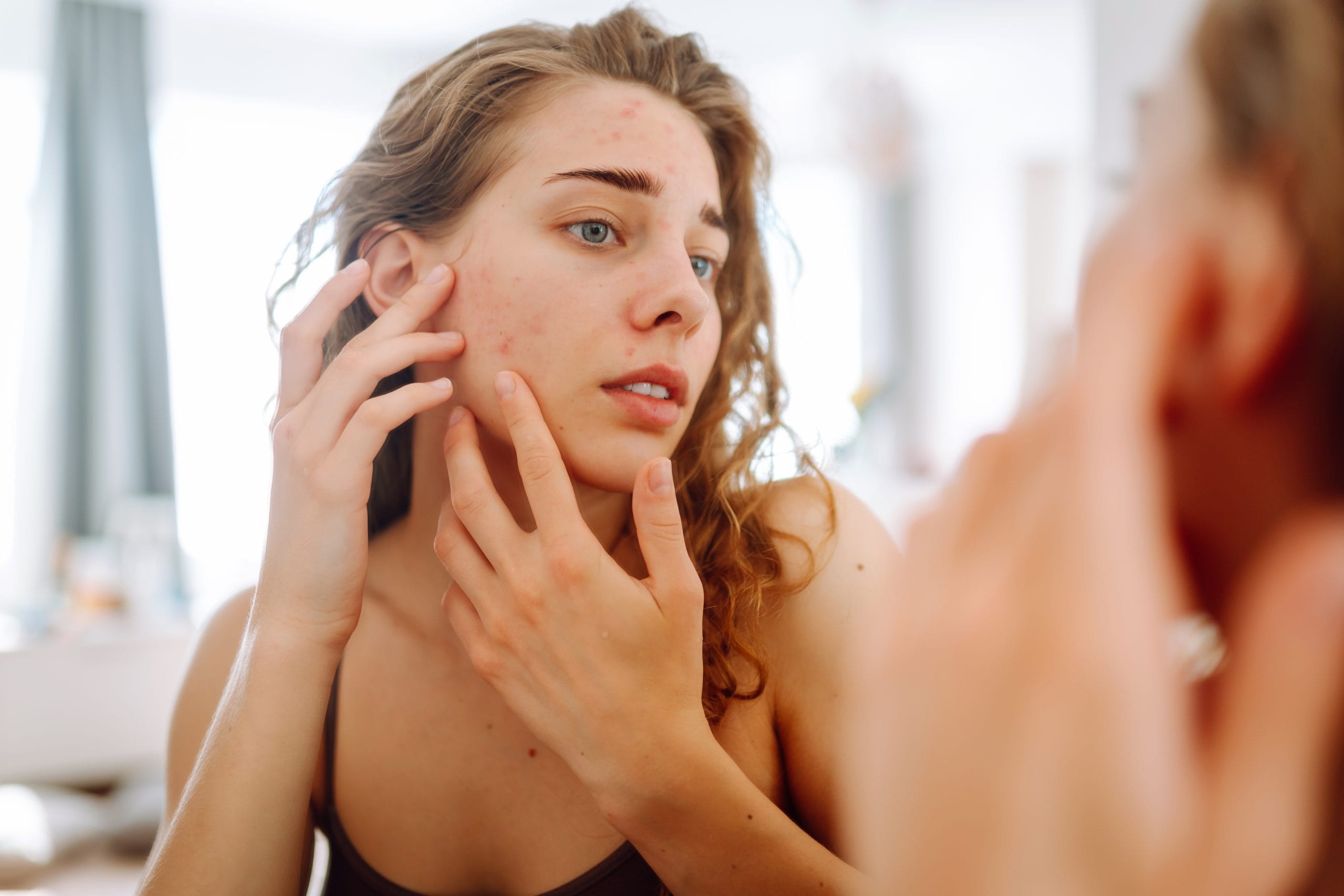
Acne is far more than a temporary skin nuisance. I believe it is important to explore this subject more deeply because, like many of you, I have witnessed how much acne can affect self-confidence, regardless of age. Although we often associate it with puberty, more and more adults – especially women – are struggling with this problem.
If your skin does not respond to standard creams and treatments, it is time to “dig” deeper. Acne is often a sign that something in the body is out of balance.
What brings acne out?
We all know about genetics – if your parents had severe acne, you are more likely to have it as well. Practice has shown that genetics lays the foundation by determining how active our sebaceous glands are, but external and internal factors are what “pull the trigger.”
A hormonal “whirlwind”? (It is not just puberty!)
Hormones are often the main culprits, especially in adult women. Male sex hormones (androgens), which are also present in women in small amounts, stimulate excessive production of oil (sebum).
- In women: Acne often worsens before menstruation or is associated with conditions such as polycystic ovary syndrome (PCOS). If acne persistently appears around the chin and lower jaw, there is almost always a hormonal component. This is why it is important to consult an endocrinologist as well as a dermatologist.
The silent connection – Metabolism and acne?
The importance of insulin and metabolism is receiving increasing attention. Disorders such as insulin resistance can raise the levels of hormones that stimulate oil secretion and trigger skin inflammation. The conclusion is that controlling body weight and blood sugar is just as important as using a good cream!
Healthy gut – clear skin! (The Gut–Skin Axis)
Did you know that the skin and gut are connected? Anything that disrupts balance in the gut (poor diet, stress) can also affect the skin through inflammatory processes. That is why we must take care of our gut microbiota!
Stress and cortisol – the “fight hormone”
Chronic stress is one of the greatest enemies of clear skin. When we are under prolonged stress, the adrenal glands secrete more cortisol (the stress hormone).
- Elevated cortisol directly stimulates the sebaceous glands to produce more sebum, leading to clogged pores and new inflammation. This is precisely why acne often “flares up” before important events or exams, or after periods of intense emotional or work-related pressure.
- Because of this effect, checking the morning cortisol level is also recommended in cases of persistent inflammatory acne.
Surprising culprits?
Medicines and supplements – some medicines, although they do not act directly on the skin, can cause inflammation. Pay attention to corticosteroids, certain antidepressants, and even high doses of vitamin B12.
Cosmetics that “suffocate” the skin – many creams and oils contain comedogenic ingredients (such as coconut oil or cocoa butter) that literally clog pores and cause acne (acne cosmetica). The solution is always to choose products labelled “non-comedogenic” and “oil-free.”
Pressure and friction – physical friction combined with sweat and heat causes acne mechanica. This occurs beneath tight sports equipment, helmets, or heavy clothing.
When acne persists – what should be investigated?
If acne is long-lasting, resistant to treatment, and frequently recurs, comprehensive testing is necessary so that we can identify the true cause. This step often makes the difference between a short-term and a lasting solution.
Diagnostic guideposts – which tests reveal the cause?
- Hormonal status: In women, particularly when flare-ups are cyclical, sex hormones (testosterone, DHEA-S, LH, FSH, estradiol, progesterone) and prolactin are tested. In men, hyperandrogenemia is ruled out.
- Metabolic profile: Glucose and insulin are tested and the HOMA-IR index calculated to rule out insulin resistance. A lipid profile must also be checked.
- Cortisol: Morning cortisol is measured if excessive adrenal activity due to chronic stress is suspected.
- Vitamins and inflammation – vitamin D levels (which are often low in inflammatory skin conditions) and general inflammatory markers (CRP and ESR) are frequently checked.
The two most important recommendations: diet and movement!
No treatment can be successful in the long term without lifestyle changes.
Experience has shown remarkable results when patients eliminated two key things:
- White flour and high-glycaemic-index foods: These foods cause a rapid rise in blood sugar (sweets, white bread, pasta, and carbonated soft drinks). Their consumption causes insulin spikes, which, as noted above, promote acne.
- Sugar: Sweets, hidden sugars in processed food, and fast food.
- Note: In sensitive individuals, dairy products can also be a trigger.
Instead, focus on foods rich in:
- Antioxidants: Colourful fruit and vegetables.
- Omega-3 fatty acids: Fish, flaxseed, and walnuts.
- Fibre: Whole grains, legumes, and vegetables.
Physical activity – your ally against inflammation!
Sitting is not good for either your body or your skin. It must be emphasised that moderate, regular physical activity has a fantastic effect on reducing stress, improving cortisol control, and increasing insulin sensitivity. Better metabolism also means calmer skin!
Conclusion
To achieve a truly lasting solution for persistent acne, a multidisciplinary approach is essential. This means that cooperation among a dermatologist, endocrinologist, and nutritionist is often required for the best result. Only a holistic approach allows us to target every trigger and provide you with clear skin in the long term – and that is precisely the approach offered by our polyclinic!